A friend was kind enough to send this brilliant article written by Umberto Eco in his column, La Bustina di Minerva, in the Italian news weekly, Espresso, in the September of 1994. I do not want to paste the entire text of an article into a post but this is something that I HAVE to share. This article is also something I did not find a hyperlink for - and I may not have looked around much!
Umberto Eco, professor of Semiotics at the University of Bologna, is one of those few writers whose authorship is an unmitigated joy to be involved in. And no matter how long his sentences or how waxiloquent you think his prose, he is a riveting and an utterly enlightening read. The only times I put The Name of the Rose down was to fill all the gaping holes in my education which, Eco so effortlessly exposed.
His writing is lyrical and witty, not something you would expect to find in a story of medieval religious intrigue and politics, set in a Italian monastery where a monk has been poisoned. A Franciscan monk, William of Baskerville, with his apprentice, Adso of Melk, has been sent to investigate the crime. Along the way, Jorge Luis Borges and Aristotle, the supression of knowledge and strong reasoning make for a enthralling journey. To say the least, the end is astonishing, and for any of you who think The Da Vinci Code is a good, well-researched book, I sincerely recommend you give The Name of the Rose a shot.
On a different note, the movie of the book is one of the few that attempts to do justice to the book. Personally, I do not see how that could ever be possible because the book is layered with stories within stories and you'd need to make a three week long film to do full justice to it. :-)
Among his other works, I savoured every word of Baudolino with its exquisite detail and subtlety and some of his essays and lectures on language and meaning sent me into raptures few writers, especially of the academic sort, can. However, I did not understand a word of Focault's Pendulum and am in the process of re-reading the book, this time hopefully to a modicum of comprehension.
When I grow up, I want to write like him - even if just one paragraph.
To meander back to the article on hand, I had myself a huge laugh at this one in the middle of mind-numbingly boring day at work and since I am in the business of technical writing, knowing the quirks of one side over the other, I found this even funnier!
I hope you enjoy this!
****
Friends, Italians, countrymen, I ask that a Committee for Public Health be set up, whose task would be to censor (by violent means, if necessary) discussion of the following topics in the Italian press. Each censored topic is followed by an alternative in brackets which is just as futile, but rich with the potential for polemic. Whether Joyce is boring (whether reading Thomas Mann gives one erections). Whether Heidegger is responsible for the crisis of the Left (whether Ariosto provoked the revocation of the Edict of Nantes). Whether semiotics has blurred the difference between Walt Disney and Dante (whether De Agostini does the right thing in putting Vimercate and the Sahara in the same atlas). Whether Italy boycotted quantum physics (whether France plots against the subjunctive).
Whether new technologies kill books and cinemas (whether zeppelins made bicycles redundant). Whether computers kill inspiration (whether fountain pens are Protestant). One can continue with: whether Moses was anti-semitic; whether Leon Bloy liked Calasso; whether Rousseau was responsible for the atomic bomb; whether Homer approved of investments in Treasury stocks; whether the Sacred Heart is monarchist or republican.
I asked above whether fountain pens were Protestant. Insufficient consideration has been given to the new underground religious war which is modifying the modern world. I find that whenever I tell people about it they immediately agree with me.
The fact is that the world is divided between users of the Macintosh computer and users of MS-DOS compatible computers. I am firmly of the opinion that the Macintosh is Catholic and that DOS is Protestant. Indeed, the Macintosh is counter-reformist and has been influenced by the ratio studiorum of the Jesuits.
It is cheerful, friendly, conciliatory; it tells the faithful how they must proceed step by step to reach - if not the Kingdom of Heaven - the moment in which their document is printed. It is catechistic: The essence of revelation is dealt with via simple formulae and sumptuous icons. Everyone has a right to salvation.
DOS is Protestant, or even Calvinistic. It allows free interpretation of scripture, demands difficult personal decisions, imposes a subtle hermeneutics upon the user, and takes for granted the idea that not all can achieve salvation. To make the system work you need to interpret the program yourself. Far away from the baroque community of revelers, the user is closed within the loneliness of his own inner torment.
You may object that, with the passage to Windows, the DOS universe has come to resemble more closely the counter-reformist tolerance of the Macintosh. It's true: Windows represents an Anglican-style schism, big ceremonies in the cathedral, but there is always the possibility of a return to DOS to change things in accordance with bizarre decisions: When it comes down to it, you can decide to ordain women and gays if you want to.
Naturally, the Catholicism and Protestantism of the two systems have nothing to do with the cultural and religious positions of their users. ... One may wonder whether, as time goes by, the use of one system rather than another leads to profound inner changes. Can you use DOS and be a Vande supporter? And more: would Celine have written using Word, WordPerfect, or Wordstar? Would Descartes have programmed in Pascal?
And machine code, which lies beneath and decides the destiny of both systems (or environments, if you prefer)? Ah, that belongs to the Old Testament, and is talmudic and cabalistic. The Jewish lobby, as always.
Sunday, December 04, 2005


Wednesday, November 30, 2005
Blue on White
Scratching, scraping, rasping,
A pen on paper.
Blue on white.
on purple, red and violet.
Lines... dots... blobs... until...
A distant meaning is born.
Tonight I will write.
random imitations of greatness
that wound
Only me.
A pen on paper.
Blue on white.
on purple, red and violet.
Lines... dots... blobs... until...
A distant meaning is born.
Tonight I will write.
random imitations of greatness
that wound
Only me.
Monday, November 28, 2005
News Flash!
I am sorry to interupt the relay from Bangalore but matters of extreme championship (much to my chagrin) and "Bombay-ness" (much to my pride) must be reported.
Thursday morning I was running so terribly late that unmindful of the cost, I took a rickshaw straight to work because I was to meet a friend for lunch and en route, I was also due to lend my pride and joy, my F75, to another friend. Since the day looked a little relaxed, I also grabbed my entire folder of negatives, scans, contact sheets - the works! I thought I'd put up my feet, post some pictures, do stuff I want to do - I am sure you know the rest of that song.
The camera duly dropped off with the friend in question and I proceeded to work, dying a million deaths about being late for lunch. About twenty minutes later, the rickshaw screeched to a halt and I jumped out, desperate to pay the driver and be on my way. I jammed money in his hand, ran up to the office, signed in, made a pretence of checking my mail, grabbed my wallet and ran down again.
We didn't linger much over lunch because he was due to take a train in a few hours and after we had said our au revoirs, I came back to work, settled down at my seat, and was ready to start posting photos. And that's when it hit me.
My folder was riding in the back of a rickshaw somewhere in North Bombay.
That folder contained everything I've ever shot with my F75... everything. I do not think the enormity of my utter and complete stupidity made any sort of impact at all. All it did was compound the nagging feeling that I should give up all aspirations to photography and give my camera away to someone who actually deserves it. Perhaps it was foolish, but what kept me sane through the rest of the day was the hope that the rickshaw driver would return the folder because he knew where I lived - as it were.
Office day over, I returned home by about 21:30 still in quite the daze. On my way in, I stopped by the security guard's cabin to check if my miracle has happened. I could not finish my question because my folder was lying there on the guard's table.
Sweet Christ, I couldn't react but forty-eight hours later, gratitude and a sense of Bombay-ness are my overwhelming emotions. I know that my folder was a very small thing but whether the rickshaw driver lived close by or away from my home, he most certainly took a good deal of trouble through the entire day for an arbitrary woman who may never take his rickshaw again. I do not think this would have happened anywhere in India except Bombay.
Perhaps I am being unfair in my generalization but my irrational heart tells me otherwise. For all of Bombay's faults - and fear not, I am not being swept away by the romanticism of this seemingly random act of kindness - she's a city with a soul and a heart as big as the world. There is, I believe, sometimes no choice - but to fall in love with her.
This one is not a good shot as far as focus is concerned but I think it makes for a good frame and I love the colours. And to me, it sings Bombay.

Surely I am allowed a "bad" favourite! :-)
****
Addendum: I mean no insult to any other place in India, really I don't. Please do not take it as such. :-)
Thursday morning I was running so terribly late that unmindful of the cost, I took a rickshaw straight to work because I was to meet a friend for lunch and en route, I was also due to lend my pride and joy, my F75, to another friend. Since the day looked a little relaxed, I also grabbed my entire folder of negatives, scans, contact sheets - the works! I thought I'd put up my feet, post some pictures, do stuff I want to do - I am sure you know the rest of that song.
The camera duly dropped off with the friend in question and I proceeded to work, dying a million deaths about being late for lunch. About twenty minutes later, the rickshaw screeched to a halt and I jumped out, desperate to pay the driver and be on my way. I jammed money in his hand, ran up to the office, signed in, made a pretence of checking my mail, grabbed my wallet and ran down again.
We didn't linger much over lunch because he was due to take a train in a few hours and after we had said our au revoirs, I came back to work, settled down at my seat, and was ready to start posting photos. And that's when it hit me.
My folder was riding in the back of a rickshaw somewhere in North Bombay.
That folder contained everything I've ever shot with my F75... everything. I do not think the enormity of my utter and complete stupidity made any sort of impact at all. All it did was compound the nagging feeling that I should give up all aspirations to photography and give my camera away to someone who actually deserves it. Perhaps it was foolish, but what kept me sane through the rest of the day was the hope that the rickshaw driver would return the folder because he knew where I lived - as it were.
Office day over, I returned home by about 21:30 still in quite the daze. On my way in, I stopped by the security guard's cabin to check if my miracle has happened. I could not finish my question because my folder was lying there on the guard's table.
Sweet Christ, I couldn't react but forty-eight hours later, gratitude and a sense of Bombay-ness are my overwhelming emotions. I know that my folder was a very small thing but whether the rickshaw driver lived close by or away from my home, he most certainly took a good deal of trouble through the entire day for an arbitrary woman who may never take his rickshaw again. I do not think this would have happened anywhere in India except Bombay.
Perhaps I am being unfair in my generalization but my irrational heart tells me otherwise. For all of Bombay's faults - and fear not, I am not being swept away by the romanticism of this seemingly random act of kindness - she's a city with a soul and a heart as big as the world. There is, I believe, sometimes no choice - but to fall in love with her.
This one is not a good shot as far as focus is concerned but I think it makes for a good frame and I love the colours. And to me, it sings Bombay.
Surely I am allowed a "bad" favourite! :-)
****
Addendum: I mean no insult to any other place in India, really I don't. Please do not take it as such. :-)
Tuesday, November 22, 2005
Flight in the Clouds
It was a wonderful Bombay winter afternoon when I boarded the Kingfisher flight to Bangalore. I was looking forward to the flight too, what with the airline purported to being really swanky at the dirt-cheap prices I had paid for a return ticket. Formalities at Bombay airport, a rickety transit busride, and smiling nicely at the crew on the way in over, I strapped myself into their "ultra-wide comfort" seats.
The ten minutes before take off are the most fascinating part of flying "The Good Times." You see, Kingfisher takes unbelievable advantage of being India's only airline with in-flight TV. Dr Vijay Mallya, CEO of Kingfisher Airlines, began my journey with a badly written spiel about many things that I do not now remember and but which ended with a cold "I appreciate your business." It may be statment of fact but certainly, advertising and promotional protocol dicates more warmth...?
However, indubitably the best part of the show is when Yana Gupta gives you this fascinating, horrifically lip-synched, "foreign-return" Hindi (and English too!) safety drill. If I had a copy of the tape, I do not believe I'd have another depressed day for the rest of my life! But yes, I digress.
The beginning of the flight was, to say the least, a little turbulent but I do not yet see why because like I told you, it was a beautiful winter afternoon - it was balmy, damn it! With the way that airplane swayed, for a terrifying five minutes, I really thought I was going to die. No hyperbole - I really did! As you can tell, I don't fly much. About twenty minutes later, I do think my stomach gave a blender going at top speed a run for its money.
The airhostess - an aside: I think having blond-streaked hair is mandatory if you want to be an airhostess with Kingfisher - came by with the lunch trolley and I opened one bleary eye and asked for an aerated drink. The look on her face was so magnificiently vacant that I smiled weakly and said, "A soft drink, Ma'am, preferably a lemony one, please."
It was then that she said the words that captivated my soul.
"Ma'am, are you feeling nauseatic?"
Now really, what does one say to that? I do not believe that I have been so sorely at a loss for words in while. I only nodded and closed my eyes again. To be fair, she came back almost instantly with a can of Sprite and a glass filled with ice cubes and a twist of lime. Fifteen minutes later, I was still feeling sick - until I glanced out of the window.
What I saw took my breath away and what I did was technically illegal but at this point, the airhostess would have done anything to keep me from displaying my breakfast all over the place - including tap dance on the nose of the airplane, right there and then!
I hope you enjoy these as much as I did taking them.

This looked like the sun had burst open on its head while it was dancing - it is called ... Of Hope.

Like the sun shining down on the sea - Shine Down on Me.

This photo is called Roiling. I do not think it needs more of an introduction or explanation. :-)
The ten minutes before take off are the most fascinating part of flying "The Good Times." You see, Kingfisher takes unbelievable advantage of being India's only airline with in-flight TV. Dr Vijay Mallya, CEO of Kingfisher Airlines, began my journey with a badly written spiel about many things that I do not now remember and but which ended with a cold "I appreciate your business." It may be statment of fact but certainly, advertising and promotional protocol dicates more warmth...?
However, indubitably the best part of the show is when Yana Gupta gives you this fascinating, horrifically lip-synched, "foreign-return" Hindi (and English too!) safety drill. If I had a copy of the tape, I do not believe I'd have another depressed day for the rest of my life! But yes, I digress.
The beginning of the flight was, to say the least, a little turbulent but I do not yet see why because like I told you, it was a beautiful winter afternoon - it was balmy, damn it! With the way that airplane swayed, for a terrifying five minutes, I really thought I was going to die. No hyperbole - I really did! As you can tell, I don't fly much. About twenty minutes later, I do think my stomach gave a blender going at top speed a run for its money.
The airhostess - an aside: I think having blond-streaked hair is mandatory if you want to be an airhostess with Kingfisher - came by with the lunch trolley and I opened one bleary eye and asked for an aerated drink. The look on her face was so magnificiently vacant that I smiled weakly and said, "A soft drink, Ma'am, preferably a lemony one, please."
It was then that she said the words that captivated my soul.
"Ma'am, are you feeling nauseatic?"
Now really, what does one say to that? I do not believe that I have been so sorely at a loss for words in while. I only nodded and closed my eyes again. To be fair, she came back almost instantly with a can of Sprite and a glass filled with ice cubes and a twist of lime. Fifteen minutes later, I was still feeling sick - until I glanced out of the window.
What I saw took my breath away and what I did was technically illegal but at this point, the airhostess would have done anything to keep me from displaying my breakfast all over the place - including tap dance on the nose of the airplane, right there and then!
I hope you enjoy these as much as I did taking them.
This looked like the sun had burst open on its head while it was dancing - it is called ... Of Hope.
Like the sun shining down on the sea - Shine Down on Me.
This photo is called Roiling. I do not think it needs more of an introduction or explanation. :-)
Wednesday, November 16, 2005
I'm back!
For two days now, actually.
I must confess, I've been feeling guilty about not blogging and not keeping up with my daily reads. But I'm afraid I've only been snuggling deeper, and deeper and still deeper into me.
You see, I was on holiday and awesome does not even begin to approach the first syllable of my time in Bangalore.
I simply loved....
... that city - its weather and food.
... that wonderful old-worldliness of its myriad 13th Main and 8th Cross roads.
... that I could get a 20% discount on a staggeringly eclectic selection of brand-new books.
... that I conned friends into buying me books.
... being one of the guys at Mojo's, over beer and rock n' roll.
... that I made some new friends that, I hope, will grow only closer.
... that I laughed about serious issues and kicked up a fuss over a missing fountain pen.
I've come back about 20 books, much love, a proper understanding of the rule of thirds, and the most beeyootifool sunset richer. I took some other images which I will post once I get the scans back. There are also some hilarious stories of bizzare cocktail mixes through the night to tell - another post... soon, I promise!
Bangalore was a week of nothing but chilling with the girls and...
... lying back and giggling over men and their idiosyncrasies.
... watching movies, remembering an English major not-so-long ago.
... holding hands over broken but healing hearts.
... talking deep into the late night or perhaps, late into the deep night.
... relearning how to be - I think I had forgotten how.
Ah, yes. I do think my soul is rested. :-)
I must confess, I've been feeling guilty about not blogging and not keeping up with my daily reads. But I'm afraid I've only been snuggling deeper, and deeper and still deeper into me.
You see, I was on holiday and awesome does not even begin to approach the first syllable of my time in Bangalore.
I simply loved....
... that city - its weather and food.
... that wonderful old-worldliness of its myriad 13th Main and 8th Cross roads.
... that I could get a 20% discount on a staggeringly eclectic selection of brand-new books.
... that I conned friends into buying me books.
... being one of the guys at Mojo's, over beer and rock n' roll.
... that I made some new friends that, I hope, will grow only closer.
... that I laughed about serious issues and kicked up a fuss over a missing fountain pen.
I've come back about 20 books, much love, a proper understanding of the rule of thirds, and the most beeyootifool sunset richer. I took some other images which I will post once I get the scans back. There are also some hilarious stories of bizzare cocktail mixes through the night to tell - another post... soon, I promise!
Bangalore was a week of nothing but chilling with the girls and...
... lying back and giggling over men and their idiosyncrasies.
... watching movies, remembering an English major not-so-long ago.
... holding hands over broken but healing hearts.
... talking deep into the late night or perhaps, late into the deep night.
... relearning how to be - I think I had forgotten how.
Ah, yes. I do think my soul is rested. :-)
Saturday, November 05, 2005
Of Tangerine and 55 Word Tags
With the ebb and flow of the sea,
Tangerine closes about me.
The wind,
Touching my breasts, my inner spaces,
Caresses this silent lucidity.
In the distance, whispers carry
seductive invitations to misplaced dreams.
My nightmares writhe
In the butterfly death dance and
… release me.
The ebb and flow of the sea…
A hypnotic panacea.

****
I have .:A:. to thank for this. This was so much fun - even though I did take too long doing it! :-)
Technorati Tag: 55 word poem
Tangerine closes about me.
The wind,
Touching my breasts, my inner spaces,
Caresses this silent lucidity.
In the distance, whispers carry
seductive invitations to misplaced dreams.
My nightmares writhe
In the butterfly death dance and
… release me.
The ebb and flow of the sea…
A hypnotic panacea.
****
I have .:A:. to thank for this. This was so much fun - even though I did take too long doing it! :-)
Technorati Tag: 55 word poem
Wednesday, November 02, 2005
It really Is Diwali!
It's a funny thing about rituals really, especially of the religious variety. For the most part, I dislike them intensely but some of them are inextricably linked with both the anticipations of my childhood and the contentments of my present.
Two nights ago, Diwali really began. After what is too long, I was sitting in the middle of a Laskhmi pooja, looking around at my family be more at peace than I've seen in recent memory - my mum, busy with the different parts of the ritual, my father, completely into the ceremony, and my brother and I, watching peacefully. That's how every single Dhanteras in living memory (save for the past few) has been spent.
For various reasons, for my family, the past few years haven't been as they ought to have. Somehow this year, a simple Lakshmi pooja has restored a normalcy and peace that I have, as a part of a unit and an individual, sought awhile. Amazing really, how easy it is to let things come to you sometimes.
This year's ceremony was different because the priest conducting it was not our usual one. That grand old gent passed away a few years ago. How I missed him this time. You see, as Indian, Hindu priests go, he was a dude - no other word for it! Tall, imposing and with a ready smile and wink for a child (and often young adult!) who couldn't sit still.
This new priest was a little more "with it", gave me analogies that were from a world of gizmos and technology and plain didn't have the personality of our previous priest. All the same, the ceremony was sufficiently similar to the usual one for me to be grateful. Change, it seems, always carries with it a portion of the familiar.
Tomorrow is the Gujarati New Year - among the most important days of the year for my community. It is, by far, the most important day of the year for my family. I will suffer relatives giving me varying levels of grief for various things and yet be happy about the great food and the new year that comes ahead of me.
I hope you've had a wonderful and safe Diwali and if you've been away from family, I hope you've had a lovely time with people you like. May the year ahead be full of all the benedictions that you deserve. May it also bring peace, love and laughter. Like I will tell painful relations in a few hours, allow me to say Saal Mubarak (Happy New Year) to all of you.
I know I started the year right. Please, oh please, leave it be this way! :-)
Two nights ago, Diwali really began. After what is too long, I was sitting in the middle of a Laskhmi pooja, looking around at my family be more at peace than I've seen in recent memory - my mum, busy with the different parts of the ritual, my father, completely into the ceremony, and my brother and I, watching peacefully. That's how every single Dhanteras in living memory (save for the past few) has been spent.
For various reasons, for my family, the past few years haven't been as they ought to have. Somehow this year, a simple Lakshmi pooja has restored a normalcy and peace that I have, as a part of a unit and an individual, sought awhile. Amazing really, how easy it is to let things come to you sometimes.
This year's ceremony was different because the priest conducting it was not our usual one. That grand old gent passed away a few years ago. How I missed him this time. You see, as Indian, Hindu priests go, he was a dude - no other word for it! Tall, imposing and with a ready smile and wink for a child (and often young adult!) who couldn't sit still.
This new priest was a little more "with it", gave me analogies that were from a world of gizmos and technology and plain didn't have the personality of our previous priest. All the same, the ceremony was sufficiently similar to the usual one for me to be grateful. Change, it seems, always carries with it a portion of the familiar.
Tomorrow is the Gujarati New Year - among the most important days of the year for my community. It is, by far, the most important day of the year for my family. I will suffer relatives giving me varying levels of grief for various things and yet be happy about the great food and the new year that comes ahead of me.
I hope you've had a wonderful and safe Diwali and if you've been away from family, I hope you've had a lovely time with people you like. May the year ahead be full of all the benedictions that you deserve. May it also bring peace, love and laughter. Like I will tell painful relations in a few hours, allow me to say Saal Mubarak (Happy New Year) to all of you.
I know I started the year right. Please, oh please, leave it be this way! :-)
Saturday, October 29, 2005
Decadence and a few Photos
Decadence, I am told, is when you call in sick from work for a week, call your (in) significant other over, go down the sex, drugs and rock 'n roll way, cook scrambled eggs (anda bhurjee) and necessarily order out for minced mutton (kheema). This is, I should tell you, "merely the beginning of decadence."
Even as I agree, I don't.
Consider this. On Tuesday, you sign in at work at a quarter to one in the afternoon, leave at one thirty for lunch, pick up a beer or two and some sandwiches. Once done, you then head out for a short drive to aid digestion. When you finally stop driving eighty kilometers from Nashik to park near the most picturesque little brook, you sit down by it, looking up at the sky. While chewing on some stray grass, you are contemplating both amusement and murder while your friend is busy bemoaning the lack of beer and you are kicking yourself because you do not have your camera handy. And you have been forced to take only a million images in your head only.
Two cigarettes later, you have sauntered back to the car and are going back to office. After battling some homeward bound traffic, one friend accompanies you upstairs while the other hands you his access card and waits downstairs. In twenty minutes, all three of you have swiped out and are in varying stages of the commute home. What you have to show for a long, hard day at work is a profound, enfolding, soul-satisfying, mellow warmth and the grand sum of fifty-five minutes in the office premises. Now I ask you - how would you define decadence?
Since I don't have pictures of this extemporary(!) jaunt to show, I hope that these of Madh Island will do. Thirty-five exposures and I know that I am only just getting started learning how to create beauty. For the most part, I am content because I can now live in the prayer of something better to come.
For those of you who love Goa, I hope the first photo kindles a memory somewhere and please, tell me this isn't exactly like Goa! :-)


Addendum: Should you want to see any more of my photos from this trip (and others), you can click here.
Even as I agree, I don't.
Consider this. On Tuesday, you sign in at work at a quarter to one in the afternoon, leave at one thirty for lunch, pick up a beer or two and some sandwiches. Once done, you then head out for a short drive to aid digestion. When you finally stop driving eighty kilometers from Nashik to park near the most picturesque little brook, you sit down by it, looking up at the sky. While chewing on some stray grass, you are contemplating both amusement and murder while your friend is busy bemoaning the lack of beer and you are kicking yourself because you do not have your camera handy. And you have been forced to take only a million images in your head only.
Two cigarettes later, you have sauntered back to the car and are going back to office. After battling some homeward bound traffic, one friend accompanies you upstairs while the other hands you his access card and waits downstairs. In twenty minutes, all three of you have swiped out and are in varying stages of the commute home. What you have to show for a long, hard day at work is a profound, enfolding, soul-satisfying, mellow warmth and the grand sum of fifty-five minutes in the office premises. Now I ask you - how would you define decadence?
Since I don't have pictures of this extemporary(!) jaunt to show, I hope that these of Madh Island will do. Thirty-five exposures and I know that I am only just getting started learning how to create beauty. For the most part, I am content because I can now live in the prayer of something better to come.
For those of you who love Goa, I hope the first photo kindles a memory somewhere and please, tell me this isn't exactly like Goa! :-)
Addendum: Should you want to see any more of my photos from this trip (and others), you can click here.
Tuesday, October 25, 2005
The Age of Kali
I must admit, I was very skeptical about reading William Dalrymple's The Age of Kali. I didn't have a very good time of his White Mughals and was content not reading him again. Until a much respected friend asked me to give him another chance. Still hesitant and not wanting to invest in it myself, I dragged Words Worth to a bookstore and insisted she buy me the book for a birthday long gone.
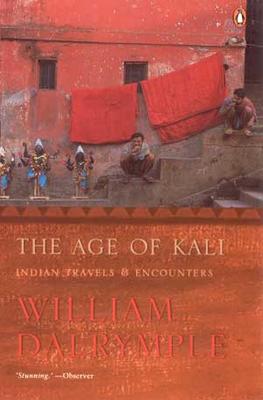 Before beginning it, my greatest fears about the book were that he would either sell India or be patronizing, as a disturbing number of diasporic and non-Indian writers tend to be. Honestly, I was also apprehensive because I didn't want to read a critique or even an account of India from a "foreigner" and all that nationalist enthusiasm.
I have seldom had the chance to be so happy about being dead wrong. This book is everything a newspaper report/article ought to be but unfortunately, isn't.
Published in 1998, The Age of Kali is a collection of essays about Dalrymple's journeys in the Indian subcontinent and the Indian Ocean and spans from 1989 to 1998. Reading these in 2005, it may seem that some of these pieces have lost either relevance or are, in a sense, anachronous. Instead however, they provide an insightful, incisive look into the history and in many ways, the origins of the current social, political and economic situations in India.
His choice of title is grounded in the Hindu view of the epochs of time in which society will move through four ages - from a golden age into social and moral chaos. Indeed, his accounts of North India would well make you believe that we are undoubtedly living in the age of Kali, the lowest throw of an ancient game of dice, an age where things fall apart.
Dalrymple's experiences demonstrate the strangehold the caste system still has on not only rural India, but much of "modern" and urban India as well. The essay on Bihar chronicles the decay of governance in North India and the manipulation of a state into poverty and lawlessness. The pieces on Rajasthan are frightening in their observation of the interdependencies between politics, the caste system, poverty, sheer brute force and the terrifying oppression of women.
The situation is no different in Vrindavan in Uttar Pradesh, where Hindu widows - many of them child widows - languish in an apathetic and corrupt system and are most often left to beggary and singing in ashrams for "a cupful of rice and two rupees." If a widow be unfortunate enough to be young and attractive, an unholy nexus between the ashram managers and some sadhus ensures that she finds her way to the bed of a local landowner who, in his turn, will sell her to a brothel once he is done with her. And yes, the police are paid well for their non-interference.
At complete odds with this is the prosperity in urban southern and western India. In Bangalore, this boom calls forth the irrational xenophobia of the Karnataka State Farmers' Association which trashed a KFC outlet since the primary agenda of every MNC in India is to debase and violate our culture. In Bombay, it gives rise to a Hindi rap star (Baba Sehgal!) and a city full of people like Shobha De and other Page 3 regulars.
His essays on the temples of South India are travel writing at its most beautiful - evocative, descriptive and grounded in careful research. In the essays on Lucknow, Goa and Hyderabad,which are a requiem for a time and grandeur long gone, Dalrymple captures every sight, sound, taste, and sensation from another's memory and brings it to delightful and immediate animation.
His essays on Pakistan have a different character and I think, as a whole, are weak: Dalrymple does not seem to put as much into them as he does into his travels in India. However, the section on Peshawar is brilliantly etched and his description of the ancient Gandhara civilization is unequaled by any other account of the area that I have ever read.
He is also a wickedly funny man and takes subtle potshots you could miss if you blinked a little too fast. His use of anecdotes and incidents is subtle and always well timed. He tells the tale of India with a lot more compassion, warmth and understanding than I have often read Indians accord her. And I don't think that his reverence is something born of "exotica".
My only grouse is that his interactions are mostly with the urban, educated elite - both page 3 and the literati, as it were. I am not sure if that is the only or perhaps even right way to approach the subcontinent because even as we are now moving full steam ahead into globalization for all, I do not think Shobha De, of all people, can be taken as a snapshot of life in Bombay - of all cities. It also seems contradictory to his experiences in north India, i.e Rajasthan, Bihar, and Vrindavan, which deal with the middle classes and lower sections of Indian society.
At the heart of the matter, William Dalrymple is a gifted writer; someone you would come back to over and over. What I liked the most is that his observations are so gracefully unintrusive - unlike most reporters that shove both fact and their opinions in your face. The book and indeed, his writing is an interface between him, the place and you, his reader. You are free to make of the experience what you will.
****
To the one I wanted to speak with - I hope I did him justice...?
 Before beginning it, my greatest fears about the book were that he would either sell India or be patronizing, as a disturbing number of diasporic and non-Indian writers tend to be. Honestly, I was also apprehensive because I didn't want to read a critique or even an account of India from a "foreigner" and all that nationalist enthusiasm.
I have seldom had the chance to be so happy about being dead wrong. This book is everything a newspaper report/article ought to be but unfortunately, isn't.
Published in 1998, The Age of Kali is a collection of essays about Dalrymple's journeys in the Indian subcontinent and the Indian Ocean and spans from 1989 to 1998. Reading these in 2005, it may seem that some of these pieces have lost either relevance or are, in a sense, anachronous. Instead however, they provide an insightful, incisive look into the history and in many ways, the origins of the current social, political and economic situations in India.
His choice of title is grounded in the Hindu view of the epochs of time in which society will move through four ages - from a golden age into social and moral chaos. Indeed, his accounts of North India would well make you believe that we are undoubtedly living in the age of Kali, the lowest throw of an ancient game of dice, an age where things fall apart.
Dalrymple's experiences demonstrate the strangehold the caste system still has on not only rural India, but much of "modern" and urban India as well. The essay on Bihar chronicles the decay of governance in North India and the manipulation of a state into poverty and lawlessness. The pieces on Rajasthan are frightening in their observation of the interdependencies between politics, the caste system, poverty, sheer brute force and the terrifying oppression of women.
The situation is no different in Vrindavan in Uttar Pradesh, where Hindu widows - many of them child widows - languish in an apathetic and corrupt system and are most often left to beggary and singing in ashrams for "a cupful of rice and two rupees." If a widow be unfortunate enough to be young and attractive, an unholy nexus between the ashram managers and some sadhus ensures that she finds her way to the bed of a local landowner who, in his turn, will sell her to a brothel once he is done with her. And yes, the police are paid well for their non-interference.
At complete odds with this is the prosperity in urban southern and western India. In Bangalore, this boom calls forth the irrational xenophobia of the Karnataka State Farmers' Association which trashed a KFC outlet since the primary agenda of every MNC in India is to debase and violate our culture. In Bombay, it gives rise to a Hindi rap star (Baba Sehgal!) and a city full of people like Shobha De and other Page 3 regulars.
His essays on the temples of South India are travel writing at its most beautiful - evocative, descriptive and grounded in careful research. In the essays on Lucknow, Goa and Hyderabad,which are a requiem for a time and grandeur long gone, Dalrymple captures every sight, sound, taste, and sensation from another's memory and brings it to delightful and immediate animation.
His essays on Pakistan have a different character and I think, as a whole, are weak: Dalrymple does not seem to put as much into them as he does into his travels in India. However, the section on Peshawar is brilliantly etched and his description of the ancient Gandhara civilization is unequaled by any other account of the area that I have ever read.
He is also a wickedly funny man and takes subtle potshots you could miss if you blinked a little too fast. His use of anecdotes and incidents is subtle and always well timed. He tells the tale of India with a lot more compassion, warmth and understanding than I have often read Indians accord her. And I don't think that his reverence is something born of "exotica".
My only grouse is that his interactions are mostly with the urban, educated elite - both page 3 and the literati, as it were. I am not sure if that is the only or perhaps even right way to approach the subcontinent because even as we are now moving full steam ahead into globalization for all, I do not think Shobha De, of all people, can be taken as a snapshot of life in Bombay - of all cities. It also seems contradictory to his experiences in north India, i.e Rajasthan, Bihar, and Vrindavan, which deal with the middle classes and lower sections of Indian society.
At the heart of the matter, William Dalrymple is a gifted writer; someone you would come back to over and over. What I liked the most is that his observations are so gracefully unintrusive - unlike most reporters that shove both fact and their opinions in your face. The book and indeed, his writing is an interface between him, the place and you, his reader. You are free to make of the experience what you will.
****
To the one I wanted to speak with - I hope I did him justice...?
Subscribe to:
Posts (Atom)